
Key Takeaways
- The short answer: gold and silver can make sense for the portion of your savings you want to protect rather than grow, once your debts are paid and your likely cash needs are covered.
- Physical precious metals are wealth preservation assets. Their job is to act as insurance for your net worth, not to produce income.
- If you have debt other than your home, pay it off before you buy gold. A common guideline after that is five to ten percent of net worth in precious metals.
- A portion of an emergency fund can be held in gold or silver, because physical metals convert to cash within hours.
- Start with widely traded bullion from a local dealer who will answer your questions, and avoid “rare” collectible coins until you know the market.
If you have been asking yourself this question lately, you are in good company. It is the question I hear most often at our Belle Meade office, usually from someone who has worked hard, saved carefully, and started to wonder whether all of that savings should be sitting in dollars.
I am a precious metals dealer, not a financial advisor, so what follows is not investment advice. It is the same honest conversation I have with clients every week, and it starts with a question most dealers never ask.
First: why do you want to own precious metals?
The answer matters, because it determines whether gold and silver are even right for you.
The way I explain it, there are two types or “baskets” of assets. In one basket you have wealth creation assets. Their job is to grow your net worth: starting a business, real estate that produces income, stocks that pay dividends. They tend to carry more risk, because growth requires it.
In the other basket you have wealth preservation assets. Their job is to protect what you have already built with minimal risk. That is where physical gold and silver belong. The role of gold is not to build wealth. It is to preserve it, and to act as insurance.
That word, insurance, is the most useful way to think about this. Gold tends to hold or gain value when everything else is struggling. People ask me when they should sell their gold, and my answer is: when you have to. If your 401(k), your stocks, and the dollar keep working the way they should, you may never sell it at all. That is how insurance works. You hope you never need it.
So if someone comes to me wanting maximum returns, I will tell them plainly that physical precious metals are not the right tool for that job. If they want to protect their purchasing power over the long term, now we are talking.
The Dave Ramsey question
Around here, a lot of savers follow Dave Ramsey, and Dave has a long track record of advising against gold. People expect me to argue with that. The truth is we have a lot in common. We both hate debt, and I would be willing to say Dave has done more to bring people out of debt than anyone else. I admire him for it.
So let me start with where I agree completely: if you have debt other than your home, do not buy gold. Pay the debt first. Debt is an open wound, and you have to stop the bleeding before you can build anything.
Where Dave and I differ is on the role gold plays. He points out that gold does not produce income, and that is true. But remember the two baskets. Gold is not there to produce income. It is there as insurance, and Dave is a pretty big fan of insurance – you can’t listen to his show for fifteen minutes without hearing an ad for it.
Here is where I think gold and silver fit naturally into a Ramsey-style plan: the emergency fund. Dave teaches three to six months of expenses set aside for emergencies, and he is right. But think about what that fund actually does. If your emergency fund is $50,000, the odds that you need all $50,000 at once in a given year are low. The likely emergency is a car repair, a medical bill, a roof. So it makes sense to keep the amount you might realistically need in cash, and it is worth asking whether some portion of the rest could be held in gold or silver, which can be converted to cash within hours. That portion is no longer sitting still while inflation quietly shrinks it.
How much is “some savings”?
Financial experts have long suggested an allocation of five to ten percent of your net worth in gold as a hedge. I think that is a sensible starting frame, but the honest answer depends on your goals and your risk tolerance, and those are conversations worth having in person.
What I can tell you from experience is that the clients who are glad they own metals treated the purchase as a deliberate slice of their savings, sized so they never feel pressure to sell at the wrong moment. Never spend money on precious metals that you know you might need for something else. You pay a premium to convert dollars into metal, so it should be money that can stay put.
Gold or silver?
Most first-time buyers ask this one, and many end up leaving with both.
Gold is the standard. It is the ultimate time tested, universally recognized store of value. You will never go wrong buying gold, and its portability is unbeatable. I could carry enough gold in my pockets to start over anywhere in the world. That is a remarkable thing to be able to say about anything you can hold.
Silver is gold’s little brother. Gold leads the way and silver follows, and tends to be slightly more volatile with arguably more upside relatively speaking. Also, silver is far cheaper by the ounce compared to gold, which makes it the practical place to start smaller. It is also the more practical metal to cash in for routine expenses, because you can sell a few ounces without touching a large position. And silver has something gold does not: real industrial demand from solar, medical, and electronics manufacturing, which gives it a second engine.
A true story about silver versus money in the bank
On my desk I keep a $25 savings bond my grandparents bought in March of 1964 for $18.75. In 1964, our dimes, quarters, and half dollars were still 90% silver. The very next year, silver was removed from our coinage.
Now imagine two paths for that $18.75. If they had cashed the bond and kept the money in the bank earning steady interest for sixty years, it would be worth a couple hundred dollars today. If they had simply kept $18.75 in those 1964 silver coins, that little bag of change would be worth well over $500 today. Same starting point, very different outcome. That is what “preserving purchasing power” means in real life, and it is why I do what I do.
What to avoid
One warning, because I learned this one the hard way as a young buyer: be careful with anyone who pushes “rare” coins on you before you know the market. Rare on its own does not mean valuable. My kid’s kindergarten drawing of a lizard in a snowstorm is rare… one of a kind, actually, and in perfect condition. There is just no demand for it. Some sellers use rarity and limited production to charge premiums that the metal will never justify. Until you really know what you are doing, stick with widely traded bullion, and work with someone who will answer every question you have. If someone will not answer your questions, walk away.
Stick to the basics
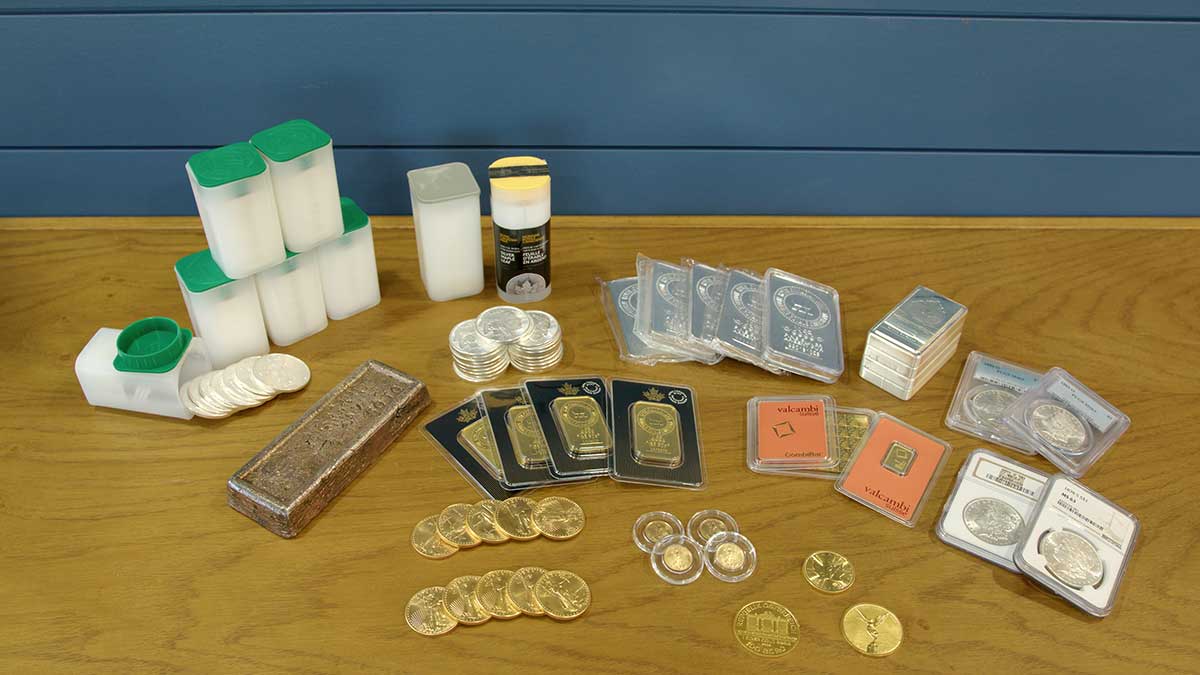
I love old, rare coins. I can geek out on the history and backstory. I love buying and selling really cool rarities. But it took decades to get to the point where I was truly comfortable with that side of coins and precious metals. But what I have known from the beginning is that gold and silver are time tested, universally accepted stores of value that only you control. They aren’t dependent on anyone or anything else for their value. For these reasons, we encourage every investor to begin with the most basic bullion products produced by reputable mints and refiners. I make sure we keep the most recognizable gold and silver coins and bars in stock and you won’t ever find us pushing rarities or limited production items.
Where to start
Come have the conversation. Bring your questions, and do not worry about knowing the terminology. We meet one client at a time at our Belle Meade office, we will talk through what you are trying to accomplish, and we will give you our honest read, even if the honest read is that you should pay off a debt first. Nashville Gold and Coin was built for exactly this conversation: TRUST IS OUR CURRENCY.
Make an appointment at nashvillegoldandcoin.com. Call 615-535-2785 or text 615-626-5435.